1.The Psychopath Test By Jon Ronson
2.A Book By Oliver Sacks named The Man Who Mistook His Wife for a Hat
3.Stumbling on Happiness – Daniel Gilbert
4.A Book By Daniel Kahneman named Thinking, Fast and Slow
5.Mistakes Were Made (But Not by Me) by Carol Tavris and Elliot Aronson
Let’s understand these topics deeply—
1-The Psychopath Test By Jon Ronson
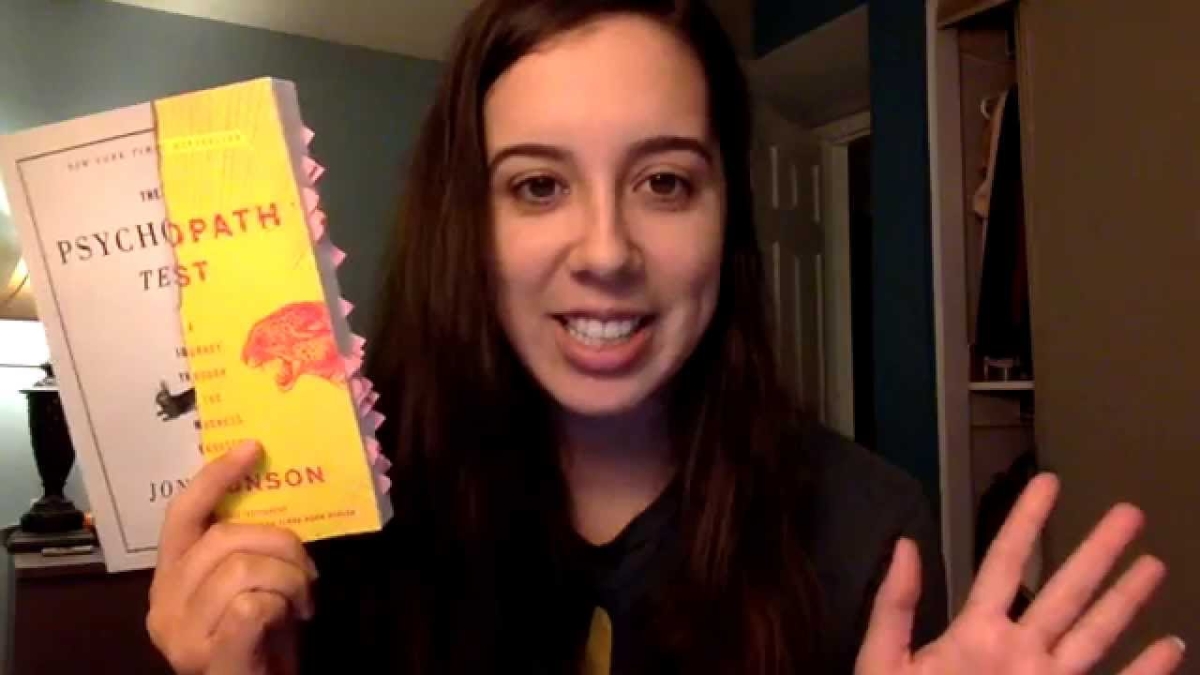
ThisBest Psychological Books contains eleven chapters. It was launched in 2011 and it lasted the entire year of 2012 on UK bestseller lists and ten weeks on The New York Times Best Seller list.
Brief information about the book—
The Psychopath Test is a fascinating tour through the brains of the insane. Jon Ronson, the finest author, uncovers psychopathic and the profession of doctors, researchers, and others that study them. He learns that many prominent Executives and politicians are psychopaths and that the individuals at the head of the lunacy industry are just as insane as the people they research. Ronson investigates a possible fraud on the world’s finest neurologists and encounters a death squad captain, a Businessman, and an inmate in a criminally mad institution. He solves the enigma of the prank and discovers that seemingly regular individuals are distinguished by their most insane edges.
PLENTY OF INFORMATION ABOUT THE AUTHOR—
Oliver Wolf Sacks was born in London and completed his medical degree at Oxford in 1958. He was a British historian of science, neurologist, and writer.
If You are interested in this book, you can buy this from the given link—
2-A Book By Oliver Sacks named The Man Who Mistook His Wife for a Hat

Oliver Sacks is a prolific writer, from the United States to the United Kingdom. He is best known for his writings on topics such as linguistics, psychology, case history, and history. Gerald Duckworth’s most well-known work, The Four Agreements, was released in 1935 and has a 1985 publication date.
Brief information about the book—
In 1985, neuroscientist Oliver Sacks published the book The book gives a summary of sack problems and explains how they are physiologically based. Additionally, it explores the neurological implications of such occurrences and, on occasion, connects to and clarifies psychological concepts. The book has twenty-four chapters divided into four sections, each focusing on a different element of mental function. The very first two parts explain deficits and excesses while the third and fourth sections define phenomenological manifestations in individuals who have intellectual disabilities, such as sudden reminiscences, modified perceptions, and higher levels of psychological qualities.
In addition to recounting the examples, Sacks comments on them, explains their pathophysiological background, explores probable neuroscientific implications of such cases, and occasionally refers to psychological notions such as the soul, id, ego, and superego.
PLENTY OF INFORMATION ABOUT THE AUTHOR—
Oliver Wolf Sacks was born in London and completed his medical degree at Oxford in 1958. He was a British historian of science, neurologist, and writer.
If You are interested in this book, you can buy this from the given link—
3-Stumbling on Happiness written by Daniel Gilbert

The book ‘Stumbling on Happiness’ is a New York Times best-seller. It was released in 2006 and has since been adapted into more than 30 languages. Daniel Gilbert looks into the concept of enjoyment in this book and explores the different psychological misconceptions that may cloud our perception of joy. He describes how individuals act in the present to be happy in the future. He also outlines various psychological research and his study to show that humans are unable to predict their destiny.
Brief information about the book—
The book Stumbling on Happiness investigates the psychology of pleasure. It contends that individuals are unique due to their capacity for creativity, but that our imagination frequently leads us astray. According to the Prospection section, individuals are unique because of their capability to envision, although our imagination frequently leads us wrong. The Subjectivity section discusses the concept of happiness and underlines how subjective it is. The section on Realism argues that imagination has flaws such as a lack of precision and a bias towards the current.
The chapter on Presentism illustrates how individuals project their current situation and ideals onto the future, yet the future is frequently different. According to the Rationalisation section, humans have a psychological immune system and are more likely to trust what favor’s them. They should believe what benefits them and reject what does not. The Corrigibility section demonstrates that illusions of foreknowledge are best handled when an individual takes understanding about their connected experience from random, other persons.
PLENTY OF INFORMATION ABOUT THE AUTHOR—
Daniel Todd Gilbert, born on November 5, 1957, is a social psychologist and writer from the United States.
If You are interested in this book, you can buy this from the given link—
4-A Book By Daniel named Thinking, Fast and Slow

Daniel Kahneman’s book Thinking, Fast and Slow was published in 2011 and emphasizes the distinction between two thought processes: “System 1” is quick and instinctual, while “System 2” is slower and more rational.
Brief information about the book—
This book provides a layperson’s guide to experimental psychology, encapsulating some of the most important findings from the last 35+ years. Daniel Kahneman provides an introduction of the scientific method as it pertains to social science, as well as the skill of developing hypotheses and proposing novel experiments to test them. them and discussing data analysis. It also explains human thinking has progressed over time due to collaboration between researchers. He also traces the field’s amazing history back to renowned logical thinkers such as Bernoulli and the Scottish philosopher David Hume. It’s also evident that the flaws in our cognitive systems are being exploited quicker than updates can be applied.
Finally, Kahneman demonstrates that our brains are highly developed to accomplish certain activities efficiently, but they are frequently ill-suited to accurately complete other mental tasks; in fact, human thinking is filled with behavioral fallacies. Because of this, humans are susceptible to subtle, incremental influence as opposed to overt manipulation. We also mastered collective mind control by taking advantage of psychological vulnerabilities.
Brief Information About Daniel Kahneman
On the 5th of March 1934, Daniel Kahneman was born. He is an Israeli-American economist and psychologist who is most known for his work on behavioral economics and the psychology of judgment and decision-making, for which he won the Nobel Memorial Prize in 2002.
If you are interested in this book, you can buy this from the given link—
5-Mistakes Were Made by Carol Tavris and Elliot Aronson
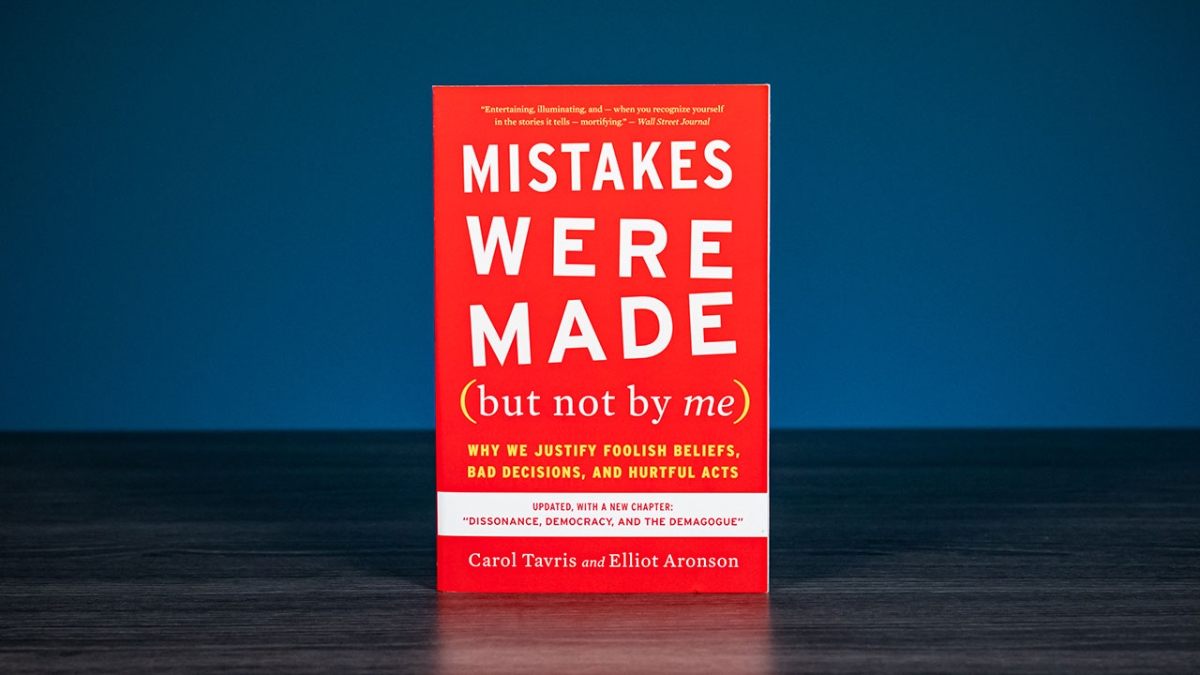
This book was written by Carol and Elliot in 2007. This book examines how cognitive biases can lead to polarization of attitudes.
BRIEF INFORMATION ABOUT THE BOOK—
Traces Were Made is a non-fiction book by social psychologists Carol Tavris and Elliot Aronson, which explores how perpetrators and victims of hurtful acts are motivated by cognitive dissonance, confirmation bias and other cognitive biases. It follows a positive feedback loop of action and self-deception, with slight differences between people’s attitudes becoming polarized.
This book delves into the processes in our minds that hinder us from admitting our mistakes, demonstrates how this causes harm in all aspects of life and offers helpful beginning points for ultimately standing up and accepting them.
Here are three things to take away from the book:
1- Self-justifications are used to cope with cognitive dissonance caused by mistakes.
2- Confirmation bias can lead to a change in moral compass.
3- Don’t think you’re stupid for making mistakes.
We must figure out if someone is willing to admit their flaws and what makes them unique.
Plenty of Information about Authors
Carol Tavris was born on the 17th of September 1944 in Los Angeles, California U.S.A. She completed her Education University of Michigan Ph.D. Scientific career fields Social Psychology.
And now we talk about the second author of the book that is Elliot Aronson on January 9th, 1932, in Chelsea, Massachusetts, U.S. He completed his education at Alma mater Brandeis University, Wesleyan University and Stanford University. He is well-known for research on cognitive dissonance, the gain-loss theory of attraction and jigsaw classroom. He received the AAAS Prize for Research in Behavioral Science.